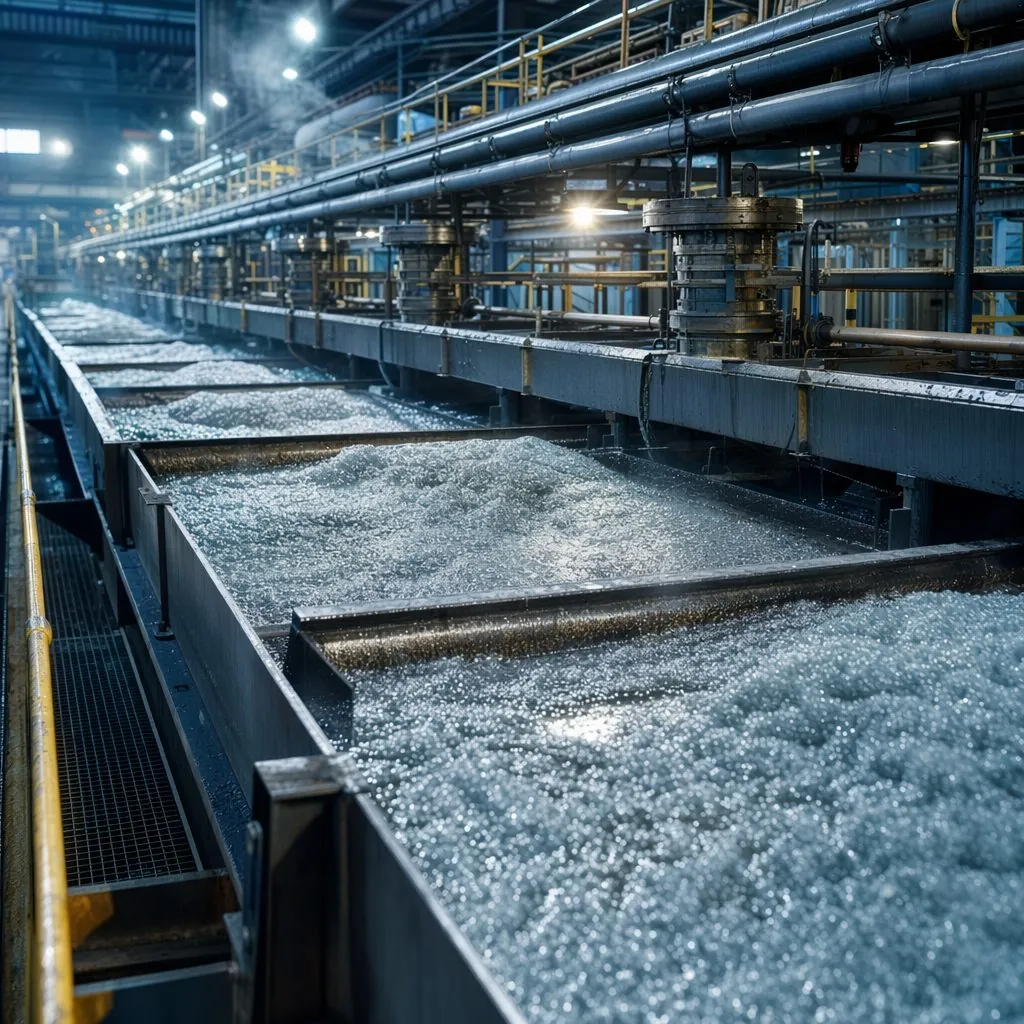
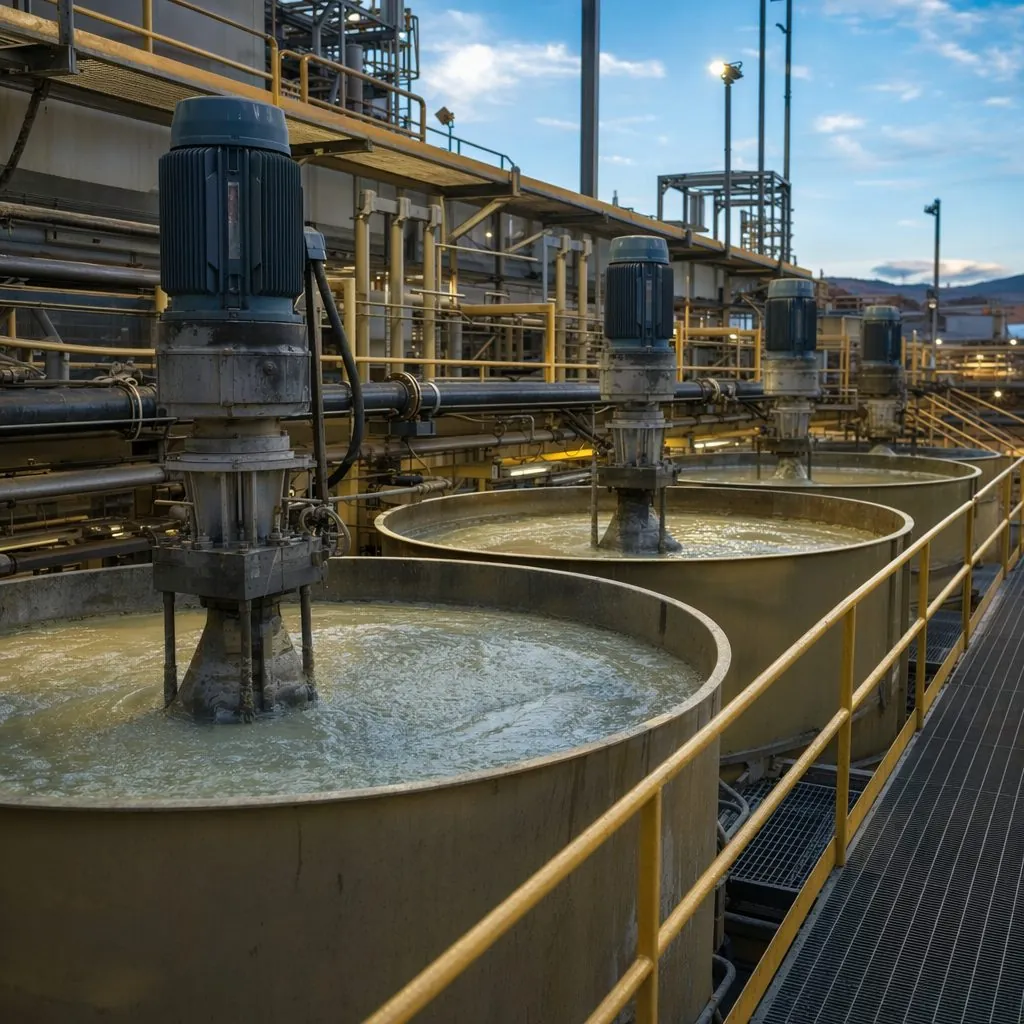
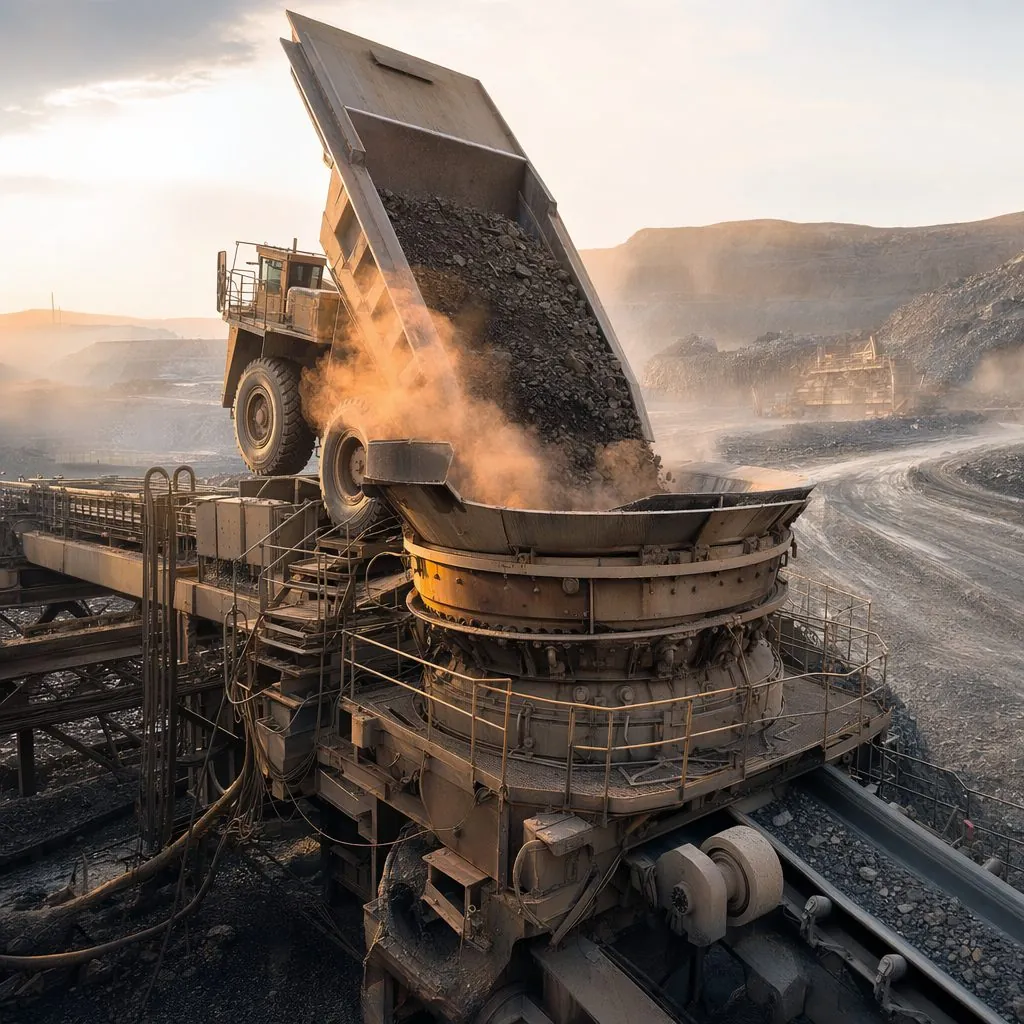
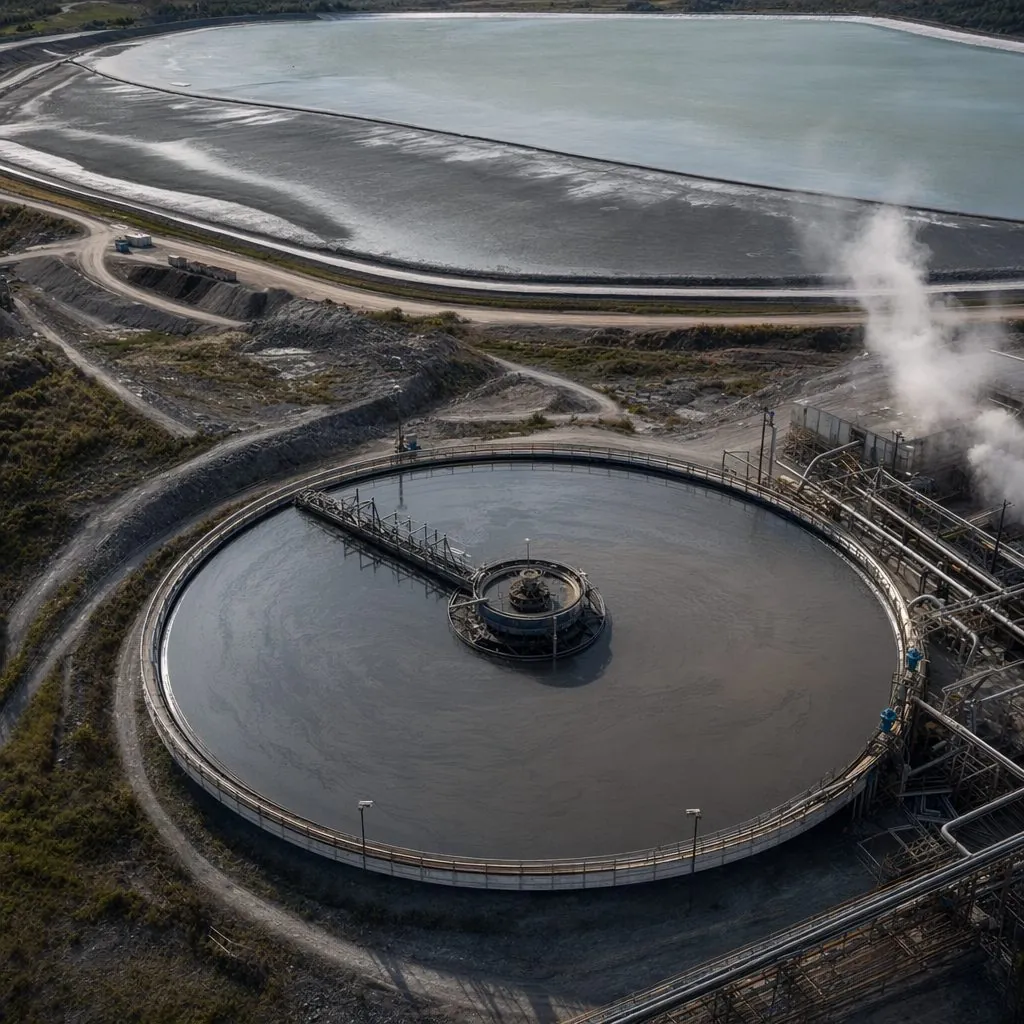
Grinding — AI-controlled SAG & ball mills
Real-time optimization of grinding circuits. AI Autopilot tunes feed rate, mill speed, water addition, and power draw to maximize throughput while holding the p80 target — across varying ore hardness and mineralogy.
Overview
Grinding is the single largest energy consumer in most mineral processing plants — typically 40-60% of total site electricity. Every percent of variability in the grinding circuit compounds downstream: oversize feed to flotation kills recovery, and oversize to leaching increases reagent consumption and cuts extraction.
Traditional grinding control relies on single-loop PID and expert-system rules. These systems handle steady-state well but fail when ore hardness shifts, blended feed changes, or mill liners wear — exactly the conditions where value is won or lost.
Brainiall AI Autopilot operates the grinding circuit as an integrated dynamic system. It reads every sensor on the mill (power, bearing pressure, mill speed, feed rate, density, cyclone overflow, p80) and continuously searches for the setpoint combination that maximizes tons per hour at the p80 target — demonstrated in a 25-day AI-versus-manual test at Mineração Aurizona (CMOC Group) in January–February 2024 (+6% throughput, Brasil Mineral #441).
What Autopilot does
Continuous, multi-variable control — not single-loop PID. Advisory-layer architecture keeps safety untouched.
Multi-variable setpoint search
AI continuously solves a multi-variable optimization across feed rate, water addition, mill speed, recirculating load, and cyclone pressure — not single-loop control.
Hardness adaptation in seconds
When Bond Work Index rises above 14 kWh/t or ore blend shifts, Autopilot re-tunes within seconds — no waiting for the next operator shift.
Precise p80 particle size control
Holds particle size distribution (p80) inside tolerance while pushing throughput. Consistent p80 means stable downstream flotation and leaching recovery.
Liner wear prediction
Tracks subtle power signature changes to forecast liner wear and schedule reline during planned shutdowns — avoiding unexpected breakdowns.
Energy-per-ton minimization
Optimizes for kWh per ton of product, not just raw throughput. Same tons out with less power in — a direct ESG and margin win.
Advisory architecture (safety preserved)
AI writes to an advisory layer, never directly to safety PLCs. Operators retain full override. Safety Instrumented Systems (SIS) untouched.
Variables continuously tuned
The AI reads every sensor on the circuit and solves the optimal setpoint combination in real time.
- Fresh feed rate (t/h)The single most important lever. AI balances against mill power and p80.
- Mill speed (% of critical)Controls grinding intensity. AI selects optimal % given hardness and charge.
- Water addition / pulp densityAffects throughput and classifier efficiency. AI holds target density per ore type.
- Recirculating loadToo high wastes energy; too low drops p80 quality. AI finds the sweet spot.
- Cyclone feed pressure / vortex finderClassification efficiency controls downstream recovery. AI coordinates with mill.
In a mid-sized gold operation (~3 Mt/y), a +6% grinding throughput uplift translates to an estimated 2,694 additional ounces of gold per year — projected at approximately $781K in incremental annual profit (net of AISC, fresh-rock scenario, 2024 assumptions).