Flotation — AI-driven recovery optimization
Continuous tuning of collector dosage, frother rate, pH, air flow, and froth depth across rougher / scavenger / cleaner circuits. AI balances recovery vs concentrate grade non-linearly, accounting for ore mineralogy and mill p80 upstream.
Overview
Flotation turns a blend of minerals into saleable concentrate. The process is extraordinarily non-linear: the same collector dose at a different pH with slightly coarser feed can swing recovery by 5-10 percentage points. And reagents are expensive — every over-dose is cash on the floor.
Conventional control tracks two or three variables at a time. A plant may have fifteen that matter. Operator intuition — hard-won across years — becomes the ceiling, not the floor, of performance.
Brainiall AI Autopilot reads the whole circuit state every few seconds — froth camera imagery, reagent flows, level sensors, airflow, pH, assays — and issues recommended setpoints that move the circuit toward the recovery-grade frontier. Over time, the system learns the mineralogy of your specific ore body and anticipates regime shifts before assays arrive.
What Autopilot does
Continuous, multi-variable control — not single-loop PID. Advisory-layer architecture keeps safety untouched.
Froth visual analysis
Computer vision processes froth-cam streams to infer bubble size, color, velocity, and stability — proxies for recovery and grade.
Reagent dose optimization
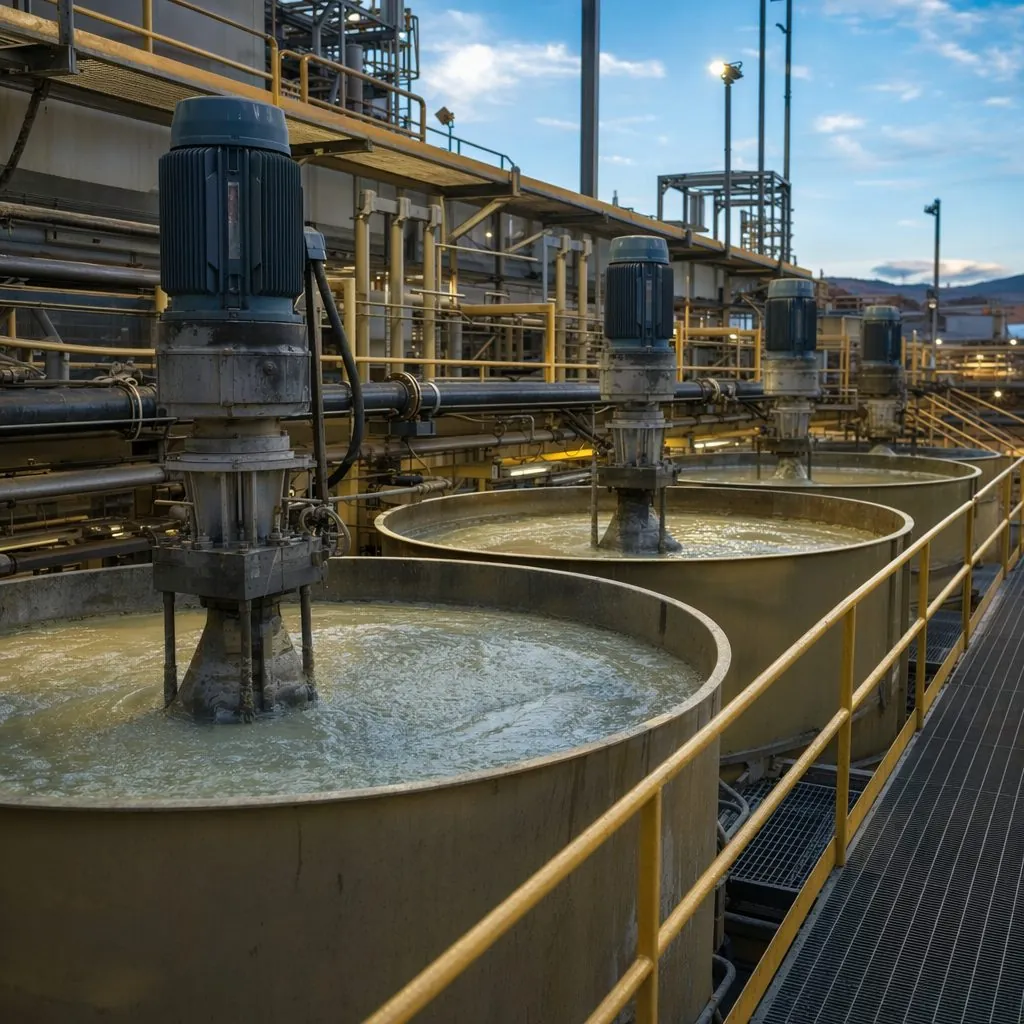
Continuous tuning of collector, frother, depressant, and activator flows. Cuts reagent over-dosing while protecting recovery.
Rougher / scavenger / cleaner coordination
AI coordinates across the full cleaning circuit — not each cell in isolation. A change in rougher pull affects cleaner mass; AI anticipates the chain.
Mineralogy-aware adaptation
Learns how your specific ore body floats. Copper porphyry behaves differently than a VMS deposit; the AI captures the distinction.
Grade prediction ahead of assays
Soft sensors estimate concentrate grade in near real-time from froth features and circuit state — adjustments happen before the lab reports.
Variables continuously tuned
The AI reads every sensor on the circuit and solves the optimal setpoint combination in real time.
- Collector dosage (g/t)Xanthate / dithiophosphate families for sulfides. AI minimizes dose at target recovery.
- Frother rate (ppm)MIBC or pine oil. Controls bubble size distribution; critical for froth stability.
- pH / lime additionSelectivity driver. Copper flotation typically pH 10.5-11.5; lead 9-10; moly 10-11.
- Airflow (Nm³/h) & JGSuperficial gas velocity. Too low starves kinetics; too high entrains gangue.
- Pulp level / froth depthDirect lever on mass pull. AI varies deeper cleaner froth to lift grade at constant recovery.
Flotation ROI is driven by two levers: recovery uplift and reagent reduction. A single percentage point of recovery in a 50,000 t/d copper concentrator is worth roughly $4-6M per year at current copper prices. AI optimization routinely unlocks 0.5-2 percentage points while simultaneously cutting collector and frother consumption by 5-15% — a double-win for margin and ESG.