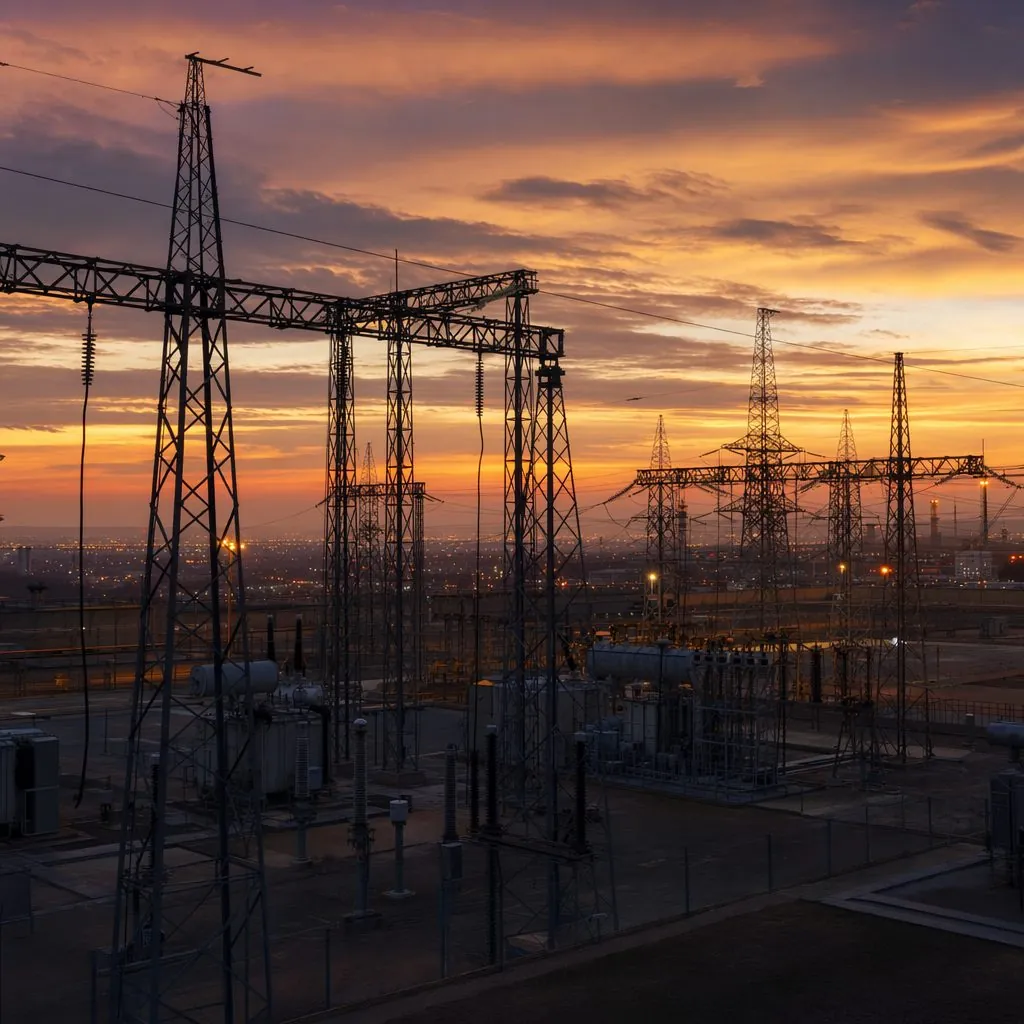
Grid management — AI for forecasting, dispatch and reserves
AI Autopilot forecasts demand and renewable output, optimizes dispatch, schedules reserves, and flags congestion hours ahead. Higher renewable penetration without sacrificing reliability.

概要
Modern grids are stochastic. Solar and wind output move with weather. Demand moves with weather too, and with a dozen other factors. Reserves must be scheduled hours ahead; congestion must be anticipated. A mistake costs in either money (over-reserving) or reliability (under-reserving).
Statistical forecasting is table-stakes, but it is rarely stitched tightly into the dispatch engine. Ops teams chase the next hour; planning teams chase the next day; they do not share state.
BrainiAll AI Autopilot unifies probabilistic forecasts for load and RES with unit-commitment and economic dispatch. It outputs hourly-ahead and day-ahead recommendations with explicit uncertainty — the operator sees the confidence interval, not just a point estimate.
Autopilotの機能
連続的・多変数制御 — 単一ループPIDではありません。アドバイザリ層アーキテクチャにより安全性はそのまま維持されます。
Probabilistic load forecasting
Hourly-ahead and day-ahead demand forecasts with confidence intervals.
Renewable output prediction
Fuses NWP, satellite, and telemetry to predict wind / solar output at farm level.
Reserve scheduling
Sizes spinning and non-spinning reserves against forecast uncertainty — not worst-case-always.
Congestion foresight
Flags likely transmission-line bindings so ops can pre-reroute or pre-dispatch.
DR / storage coordination
Integrates demand response and battery storage decisions with unit-commitment.
継続的に調整される変数
AIはサークルのすべてのセンサーを読み、最適なセットポイント組み合わせをリアルタイムで解決します。
- Hourly demand (MWh)Core forecast target.
- Wind / solar farm outputPer-site NWP-fused.
- Spinning reserve targetDepends on forecast uncertainty.
- Line flow limitsThermal and voltage constraints.
- Unit commitment stateWhich units are on, starting up, or ready.
For a mid-sized ISO/RTO with 5 GW peak load, a 10% improvement in hour-ahead MAPE typically reduces reserve over-procurement by $5-10M per year — with cleaner integration of renewables as a co-benefit.