Fours — IA pour fours à arc, à induction et de recuit
Optimise la position des électrodes, la puissance injectée, le profil de température et la composition de l'atmosphère sur les fours à arc électrique (EAF), les fours à induction et les lignes de recuit. Métallurgie stable, moins d'énergie par tonne, tap-to-tap plus rapide.
Aperçu
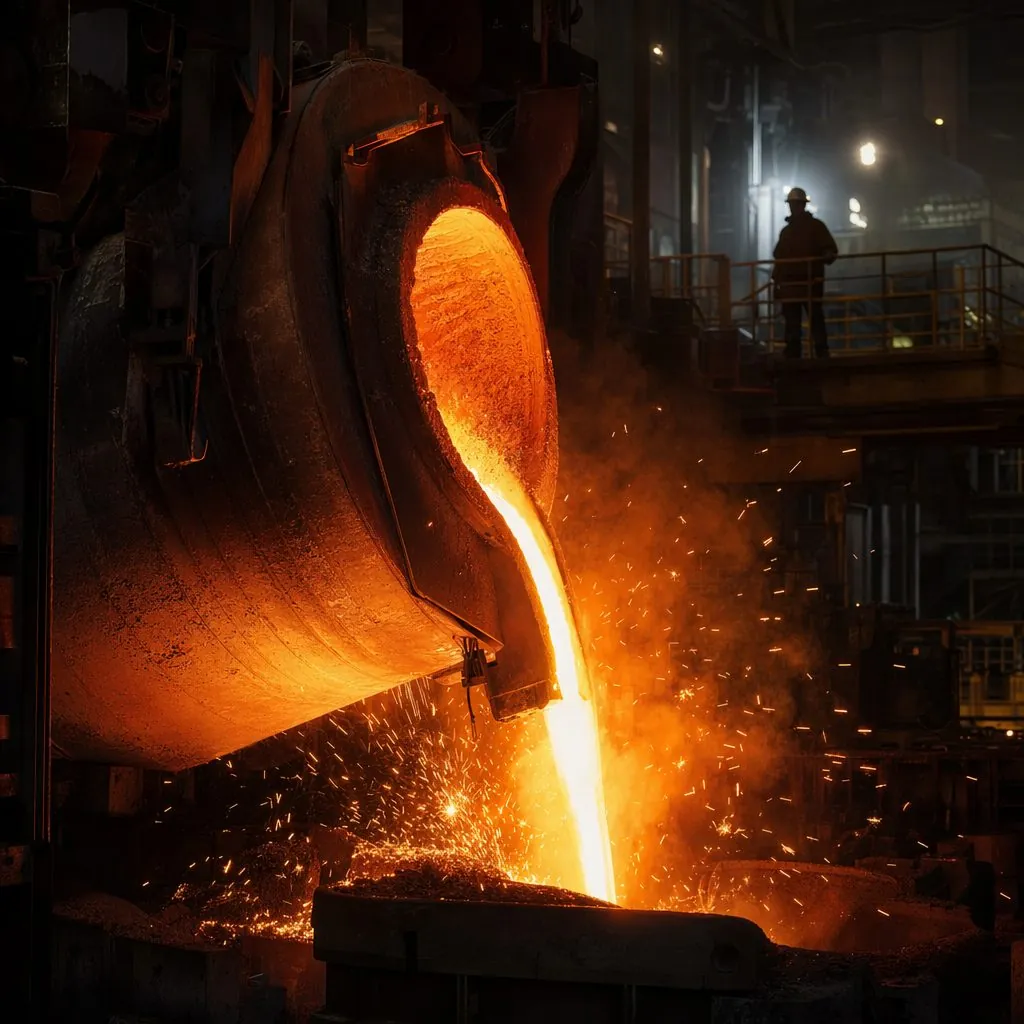
La chaleur coûte cher et ne pardonne pas. Chaque minute sur un EAF coûte de l'argent réel en électrodes et en électricité ; chaque degré hors cible sur une ligne de recuit coûte du métal rejeté en aval. Les opérateurs de four le savent — et passent leur poste à faire des arbitrages qu'un humain ne peut optimiser globalement.
Le contrôle traditionnel des fours est surtout un réglage manuel sur des séquences d'automates, l'opérateur décidant quand passer à la phase suivante. Les grands opérateurs brillent ; l'usine vit avec la variance entre les postes.
Brainiall AI Autopilot observe en temps réel les indicateurs de progression de la fusion (courant, tension, acoustique, analyse des fumées, imagerie du laitier) et recommande les transitions de courbe de puissance, les mouvements d'électrodes et les ajustements d'atmosphère qui atteignent systématiquement la cible métallurgique avec moins d'énergie et moins d'usure des réfractaires.
Ce que fait Autopilot
Contrôle continu multivariable — pas un PID mono-boucle. L'architecture en couche de supervision préserve la sécurité.
Optimisation de la courbe de puissance
L'IA choisit la prise de tension, la réactance et le temps sous tension optimaux à chaque phase de fusion pour réduire les kWh/t.
Suivi de l'usure des électrodes
Prévoit la consommation d'électrodes et déclenche le remplacement pendant les fenêtres planifiées.
Compression du tap-to-tap
Gagne plusieurs minutes par cycle grâce à la détection adaptative de progression de phase et à des décisions d'affinage plus rapides.
Analytique des fumées & du laitier
Caméra + spectroscopie + capteurs CO/CO₂/H₂ alimentent un modèle qui infère le carbone et l'état du laitier moussant.
Allongement de la durée de vie des réfractaires
Des profils thermiques plus doux réduisent le stress des réfractaires et allongent la campagne.
Variables ajustées en continu
L'IA lit chaque capteur du circuit et calcule en temps réel la combinaison optimale de consignes.
- Prise de tension / tension secondaireLevier principal sur la puissance d'arc.
- Position / courant des électrodesContrôle dynamique pendant la fusion et l'affinage.
- Débit de la lance à oxygèneCinétique de décarburation.
- Allure de chauffe des brûleursChaleur d'appoint pour les points froids.
- Température du bainCible métallurgique ; l'IA anticipe avec la trajectoire prédite.
Sur un EAF de 1 Mt/an, une réduction de 5% des kWh/t à un tarif moyen de $70/MWh peut dépasser $3M/an en économies d'énergie directes — avant même de compter les gains de tap-to-tap.