Predictive Models for Biodiesel Production
Challenge
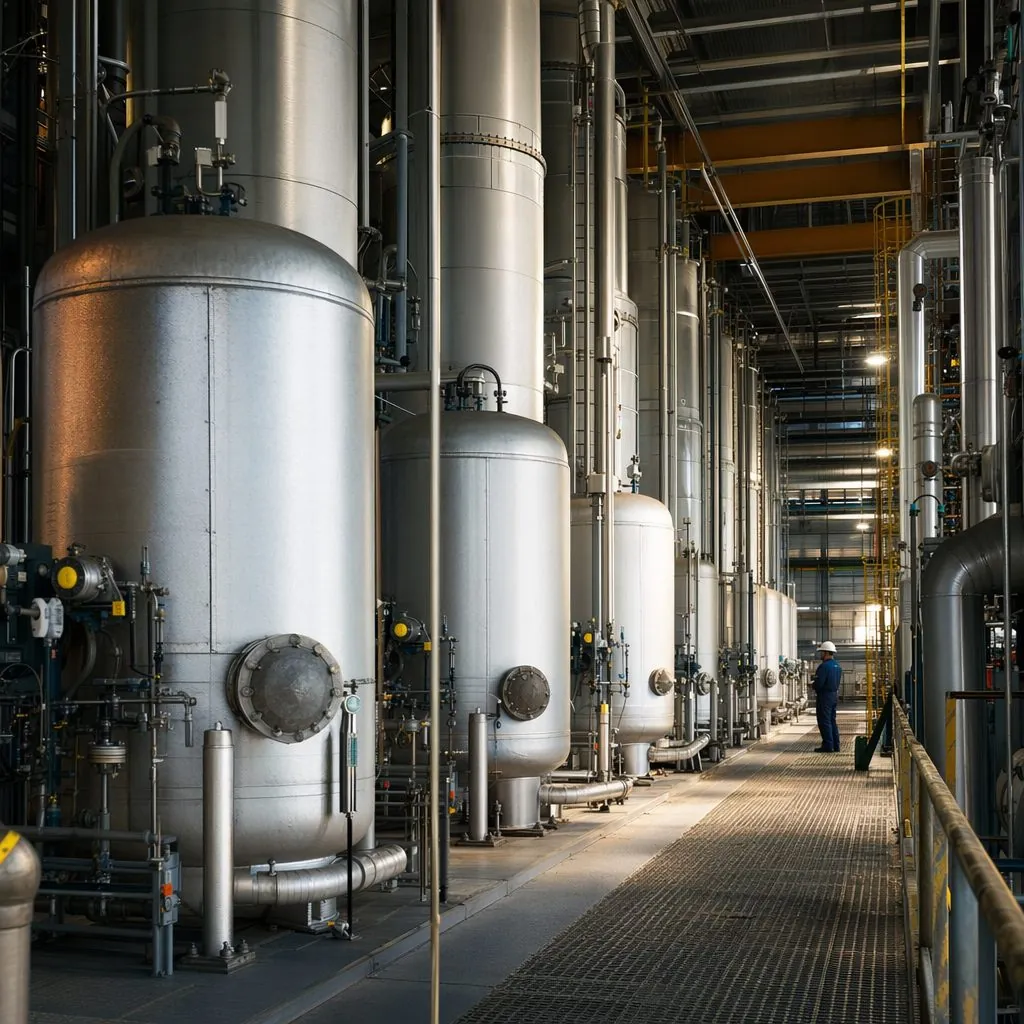
A global agribusiness and bioenergy producer engaged Brainiall to optimize biodiesel production at one of its plants in South America, around three goals: maximize transesterification yield across the reactor and decanter train, reduce consumption of methylate catalyst — a multi-million-dollar annual cost line — and monitor product quality without waiting for daily lab analysis.
Phase 1 — Data foundation (delivered)
Ten months of plant-historian telemetry (October 2024 – August 2025) — 56.5 million raw sensor readings across ~40 instrument tags — were consolidated through a bronze-to-silver data pipeline with moving-average smoothing and operational filtering that isolates productive operation from stops and maintenance.
Exploratory analysis mapped which flows, levels, densities and dosing variables actually drive the reaction — and identified distinct catalyst-dosing patterns associated with different glycerin quality levels: preliminary evidence of headroom to reduce catalyst spend without compromising product quality.
A virtual sensor as first result
A gradient-boosted model trained on 13 process variables predicts a key density-based quality proxy with 96.3% R² on held-out test data — the foundation for a virtual sensor that anticipates lab results in real time instead of waiting for daily analysis.
What comes next
Phase 2 modeling is underway: yield prediction from live process variables, golden-batch analysis, and comparison of model families — from linear baselines to gradient boosting and temporal neural networks — under a continuous-retraining design, so models keep learning as new operating data arrives.
Status
Phase 1 delivered in February 2026; phase 2 nearly complete, pending final data from the client (September 2026).